Scissor Practice Activity Worksheet: Building Essential Skills
When we talk about building a strong foundation for early childhood development, we often focus on cognitive tools like puzzles or math games. However, physical dexterity is just as critical. The Scissor Practice Activity Worksheet is not just a collection of lines on paper; it is a comprehensive tool designed to bridge the gap between raw motor function and controlled artistic expression. For educators, therapists, and parents, this resource offers a structured yet playful way to introduce the mechanics of cutting, a skill that translates directly into better handwriting and tool manipulation later in life.
The Design Philosophy: Engaging Visuals for Young Learners
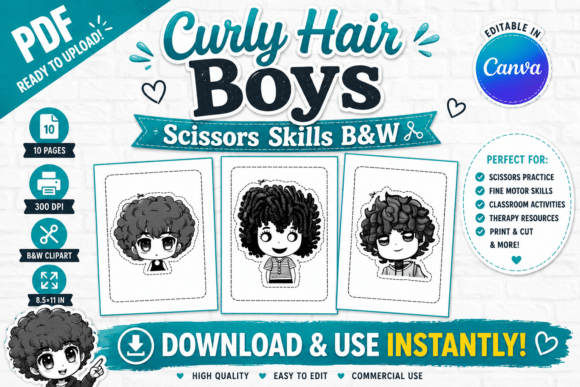
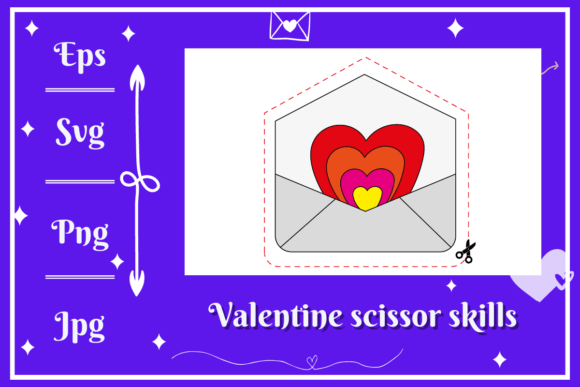
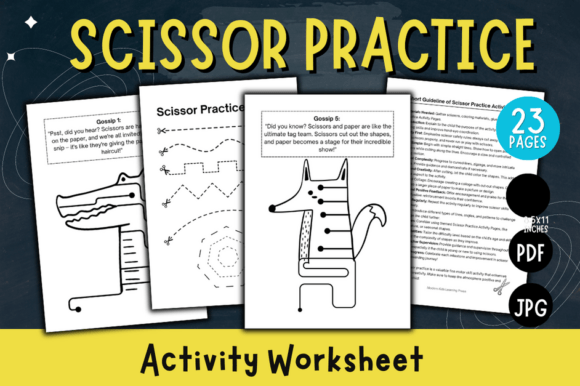
From a graphic design perspective, the effectiveness of educational materials relies heavily on visual hierarchy and appeal. This worksheet utilizes bold, clean lines and ample white space to prevent visual clutter, which can be overwhelming for children with sensory processing challenges. The shapes included—ranging from simple curves to more complex zig-zags—act as visual guides that naturally draw the eye. This thoughtful layout ensures that the child’s focus remains on the path of the scissors, enhancing hand-eye coordination without distraction. It is a prime example of how functional design supports learning objectives.
The 23-page PDF and JPEG format ensures versatility. Whether you are printing at home for a rainy day activity or preparing materials for a professional occupational therapy session, the high-resolution files maintain clarity. This is crucial because fuzzy or pixelated lines can confuse a developing visual system. The consistency across the pages allows for progressive difficulty, enabling children to build confidence as they master straight lines before moving on to curves and angles.
Practical Applications in Educational Environments
In the realm of early childhood education, consistency is key. Teachers and homeschooling parents often struggle to find resources that align with a cohesive learning plan. The Scissor Practice Activity Worksheet serves as a reliable design asset in any curriculum kit. It allows educators to standardize the cutting exercises, ensuring that every child is working on the same motor skills benchmarks. This uniformity helps in tracking progress and identifying specific areas where a child might need additional support, such as thumb opposition or grip strength.
Furthermore, the simplicity of the design allows it to be easily integrated into broader lesson plans. For instance, a teacher might pair a cutting exercise with a collage project. Once the child has successfully cut out the shapes from the worksheet, those shapes can be glued onto construction paper to create a new image. This transforms a mechanical skill drill into a creative exploration, reinforcing the idea that tools are the gateway to imagination. It is a practical workflow that saves educators time while maximizing student engagement.
Accessibility and File Formats for Modern Needs
The inclusion of both PDF and JPEG files speaks to a modern understanding of how educational content is consumed. While PDFs are standard for printing, JPEGs offer unique flexibility. A parent might display the worksheet on a tablet for a digital tracing exercise using a stylus, or a content creator might use the image in a blog post about homeschooling tips. This dual-format approach ensures the Scissor Practice Activity Worksheet remains relevant across different mediums and devices, a standard expectation in today's digital download market.
For those managing a classroom or a therapy practice, the 8.5x11 inch standard sizing is a practical choice. It fits standard printers and binders without the need for resizing or cropping, which can sometimes distort the aspect ratio of carefully designed educational graphics. This attention to technical detail ensures that the user experience is seamless from purchase to printing, allowing the focus to remain entirely on the child's development.
Enhancing Brand Identity for Educational Content Creators
If you are a small business owner or a blogger in the parenting niche, the aesthetic of your content matters. Utilizing high-quality, well-designed resources like this worksheet elevates your brand identity. It signals to your audience that you value professionalism and quality. When creating content for social media or editorial design, showcasing a clean, engaging worksheet demonstrates a commitment to providing value. It moves beyond generic stock imagery and offers a tangible tool that your audience can use.
Moreover, the terms of use are clear and respectful of intellectual property. Understanding that these files are for personal use is vital for maintaining the integrity of the creator's work. This transparency builds trust—a cornerstone of any successful brand strategy. By respecting these boundaries, users support the ecosystem that allows designers and educators to continue producing high-quality creative resources.
Integrating Motor Skills with Broader Learning Goals
Fine motor skills are the building blocks of independence. Mastering the use of scissors is often a precursor to other complex tasks like tying shoelaces or buttoning a coat. The Scissor Practice Activity Worksheet is more than a time-filler; it is a developmental milestone tracker. For children with autism or sensory processing disorders, the repetitive nature of these exercises can provide a calming, predictable sensory input. The visual appeal of the worksheet ensures that this repetition does not become monotonous, keeping the child motivated to complete the task.
In conclusion, this resource stands out for its blend of aesthetic appeal and functional utility. Whether you are a parent looking for a productive afternoon activity, a teacher seeking reliable classroom materials, or a therapist needing structured exercises, this worksheet delivers. It proves that educational tools can be both beautiful and highly effective, fostering a love for learning through the simple, satisfying act of cutting paper.