Antique Handwritten Diplomas: A Collection of Timeless Artistry
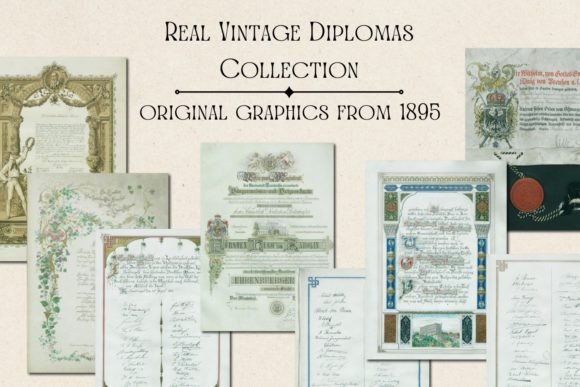
There’s a particular quality to documents from the late 19th century that modern digital text often struggles to replicate. It’s not just the ink on paper; it’s the weight of intention, the flourish of a practiced hand, and the sheer artistry embedded in every letter. This is the essence captured in the Antique Handwritten Diplomas collection, a curated set of eight authentic vintage documents from 1895. Sourced from the National Polish Digital Library and meticulously scanned at 300 dpi, these PNG files are more than just graphics—they are direct portals to a bygone era of craftsmanship.
Each diploma in this set is a masterclass in handpainted detail and beautiful handwritten texts. The visual personality is one of formal elegance, historical gravitas, and intricate beauty. You’ll find ornate borders, delicate penmanship, and a color palette that has aged into a spectrum of sepia, cream, and faded blues. The style is distinctly vintage, leaning into the aesthetic of academic achievement and official recognition. Its appeal lies in its authenticity; this isn’t a digital font trying to look old, but actual, tangible history you can incorporate into your work.
Where This Collection Truly Shines
The applications for such a unique set of design assets are surprisingly diverse, bridging the gap between personal projects and commercial endeavors. For scrapbooking and mixed-media artists, these are foundational elements. Imagine using a full diploma as a background for a heritage photo album or cutting out specific flourishes to create layered, textured collages. The high-resolution A4 format (8.27" x 11.69") ensures you can resize elements without losing the crisp detail of the original scan.
In the realm of brand identity and logo design, these graphics offer a niche but powerful tool. A brand focused on artisanal goods, bespoke services, historical education, or luxury craftsmanship could extract a single monogram, a decorative corner, or a specific word written in that stunning script to form the core of their visual identity. This approach builds a brand perception rooted in tradition, quality, and timelessness. It’s a far more nuanced strategy than simply choosing a script font from a standard library.
For editorial design and publishing, the collection is a goldmine. Use them as chapter headers in a historical novel, as featured images in a magazine article about vintage trends, or as the central visual for a book cover design. The inherent storytelling in each diploma immediately engages an audience, adding layers of narrative without a single word of your own copy. Similarly, in packaging design, a snippet of this handwriting can transform a product label, gift tag, or box design, suggesting a story of heritage and care.
Practical Guidance for Creative Integration
Working with authentic historical elements like the Antique Handwritten Diplomas requires a thoughtful approach to ensure they enhance rather than overwhelm your project. First, consider readability. While the handwritten text is beautiful, its primary role in most modern projects will be as a decorative or atmospheric element, not as body copy. It functions best as a display font equivalent—a headline, a title, or a focal point.
When it comes to font pairing, the goal is harmony, not competition. The ornate, flowing nature of this handwriting pairs exceptionally well with clean, simple typefaces. A classic serif font like Garamond or a neutral sans serif font like Helvetica can provide a stable, readable foundation for any accompanying text. The contrast allows the antique element to stand out while maintaining overall visual hierarchy and clarity. Avoid pairing it with other highly decorative or competing script fonts.
Evaluating project fit is key. This collection excels in projects where historical authenticity, elegance, and uniqueness are paramount. It might be perfect for a wedding invitation suite with a vintage theme, a certificate of achievement for a modern artisan guild, or the social media graphics for a boutique museum. However, it would likely feel out of place for a cutting-edge tech startup or a children’s toy brand.
Remember, the files are provided as high-quality PNGs with transparent backgrounds, offering immense flexibility. You can overlay them on different textures, adjust their color tone to match your palette, or isolate specific elements. This is the advantage of using such premium font alternatives in your toolkit—they provide raw, versatile material for truly original work. By integrating these genuine artifacts, you’re not just adding a graphic; you’re embedding a piece of history into your creation, fostering a deeper audience engagement and a memorable, professional finish.